Most people hire a presentation designer the way they hire a printer: send the file, compare prices, pick the fastest. Then the deck comes back prettier but no clearer — and the meeting goes the same way it would have anyway. A good presentation designer changes what the audience understands, not just how the slides look. This guide covers how to tell the difference before you pay.
Step 1: decide what you are actually buying
There are three different jobs hiding behind “presentation design”. Know which one you need before you brief anyone.
| You need | Signs | Who fits |
|---|---|---|
| Visual polish | The story works; slides look dated or inconsistent | A skilled freelancer or studio redesign service |
| Story + design | People get lost, ask the wrong questions, or skim | A specialist studio that restructures before it designs |
| A system | Your team builds decks every week and they all look different | A studio or agency that builds master templates and rules |
If you are raising money, closing a large deal or presenting to a board, you almost always need the second job — even if you think you need the first.
Step 2: freelancer, studio or agency?
- Freelancer. Best when your narrative is finished and you need clean execution fast. Quality varies widely, so judge the portfolio, not the profile headline.
- Specialist presentation studio. Best for most investor, sales and leadership decks: narrative work plus design, editable files and a team that can absorb a deadline.
- Large agency. Best when the deck is one part of a wider brand or campaign programme and budget is not the constraint.
For real price ranges by provider type, see how much pitch deck design costs and how much presentation design costs.
Step 3: review a portfolio the right way
- Look for before-and-after work. A gallery of finished slides shows taste; a before/after shows judgment. Ask for at least one.
- Check data slides, not just covers. Covers are easy. Charts, tables and process slides show whether a designer can make information readable.
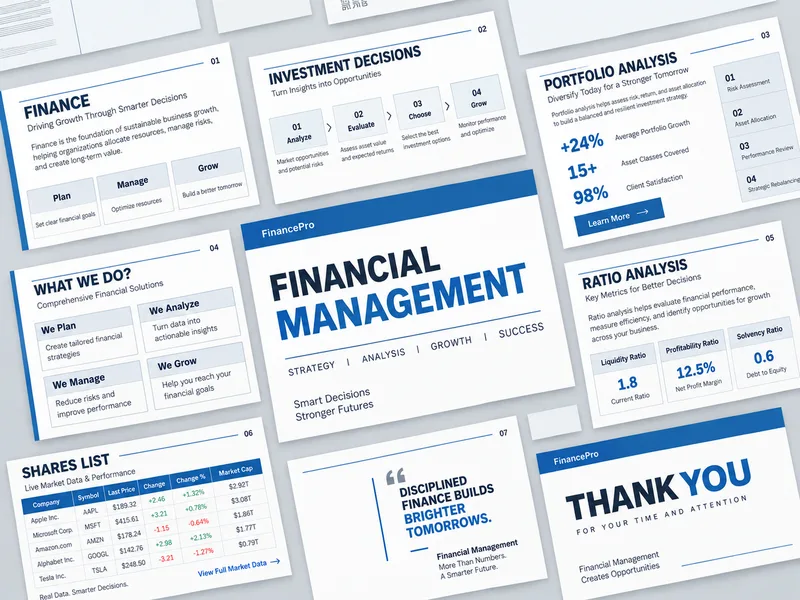
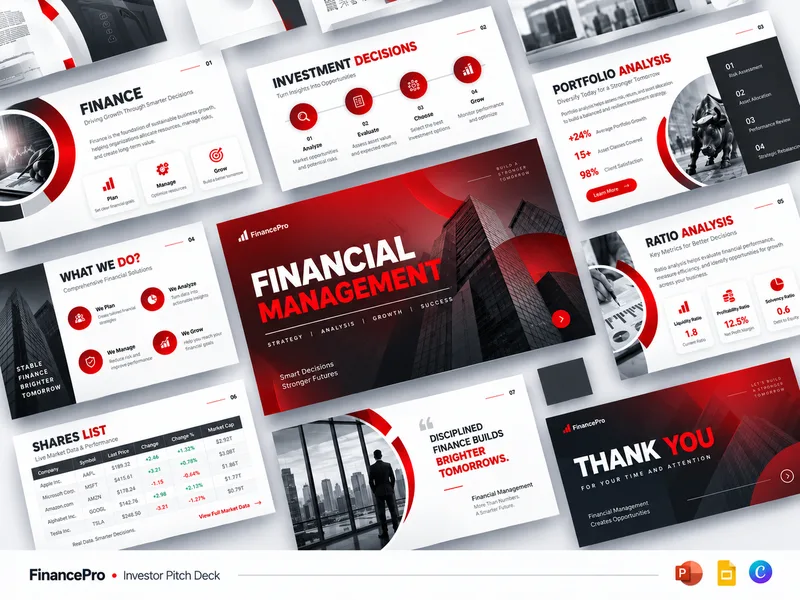
- Look for range inside one deck. A real deck needs title, data, comparison, timeline and team slides that still feel like one system.
- Ask what was real client work. Concept work is fine for showing style, but you want proof they have shipped under real constraints.
Step 4: send a brief that gets you a real quote
- The current deck or source material (any format), plus brand guidelines if you have them.
- The audience and the decision you want from them — “approve the budget”, “take a second meeting”.
- Slide count, deadline and the software your team edits in (PowerPoint, Google Slides or Keynote).
- Anything that cannot change: legal wording, financial figures, mandatory slides.
Step 5: ask these questions before you pay
- Will you design a sample slide from my content before full production?
- What will you change besides the design — headlines, order, data presentation?
- Do I receive native, editable files with master slides, or a flattened PDF?
- How many revision rounds are included, and what counts as a new request?
- Is the price fixed in writing before work starts?
Step 6: insist on the right deliverables
At minimum: an editable master file in your software, a PDF export, fonts that are licensed or packaged, and charts that are real chart objects you can update — not pasted pictures. If you present often, ask for a short layout guide so your team can add slides without breaking the system.
What a good process looks like
- Discovery (hours, not weeks). The designer reads your material and asks about the audience and the decision before quoting.
- Fixed quote and timeline. Scope, slide count, revision rounds and delivery date in writing.
- Direction sample. One or two slides from your own content, so you approve the look and the approach before everything is built.
- Full build. Every slide on one layout system, with data rebuilt as editable charts.
- Revisions and handover. Structured feedback rounds, then final files, fonts and a PDF.
A designer who skips straight from “send me the file” to “here's the finished deck” is guessing at what you need. The sample step is where most expensive misunderstandings get caught.
Working across time zones
Many of the best presentation designers work remotely. That works well when communication is structured: one consolidated round of comments per revision, a shared folder for source files, and an agreed channel (email, WhatsApp or your project tool). Time-zone differences can even help — you send feedback at the end of your day and wake up to the update.
How we work
Every project at Redesign Presentation starts with a sample slide for approval and a fixed quote. Redesigns start from $150 for 10–15 slides, investor decks from $300 and template systems from $500 — see the full pricing table or browse our portfolio.
Frequently asked questions
What does a presentation designer do?
A presentation designer turns your content into slides an audience understands quickly: restructuring the order, rewriting headlines to state the takeaway, turning data into readable charts and applying one consistent visual system, then delivering editable files.
Should I hire a freelancer or a presentation design studio?
Hire a freelancer when your story is finished and you need clean execution. Hire a specialist studio when the deck has to persuade — investors, buyers or a board — because the narrative usually needs work before the design does.
What should I send a presentation designer?
Your current deck or notes, brand guidelines, the audience and the decision you want, slide count, deadline, and the software your team will edit in.
How do I check a presentation designer's quality?
Ask for before-and-after examples and look closely at data slides, not just covers. A good designer can show how they made information easier to read, not only how they made it look better.