A sales deck has two audiences: the person in the meeting and the people they forward it to afterwards. Most deals are decided in rooms you are not in, by people who only see your slides. Design for that second audience and you win both.
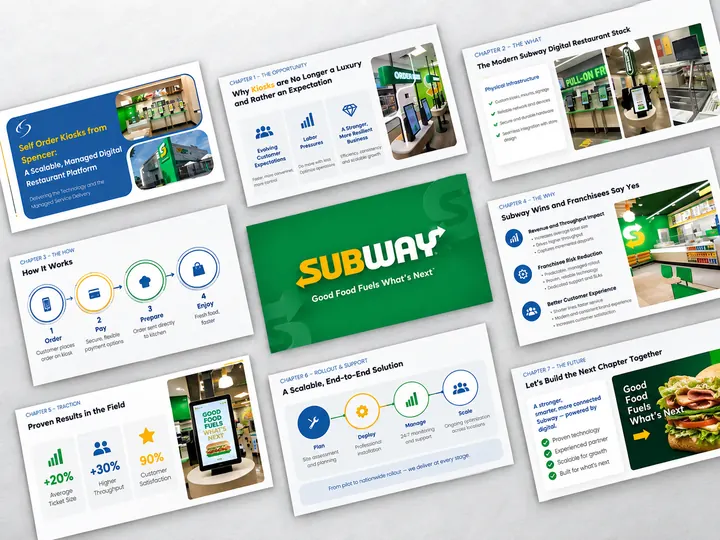
Start with their world, not your company
Skip the “about us” opener. Open with the buyer's situation and the cost of leaving it unsolved. When a prospect sees their own problem described accurately, they lean in; when they see your founding year, they check email.
A structure that works
| Slide | Purpose |
|---|---|
| The shift | What has changed in the buyer's market |
| The cost of standing still | What the problem costs them today |
| The better outcome | What success looks like, before you mention features |
| How it works | Your solution in three to four steps |
| Proof | Results, case studies and logos you have permission to use |
| Objections | Integration, risk, price — answered before they're asked |
| Next step | One clear, small action with a date |
Bring proof forward
Buyers are sceptical by default. A single concrete result — a named outcome from a similar customer — does more than three feature slides. If proof is your strongest asset, put it straight after the problem.
Make it forwardable
- Every slide headline states the point, so the deck works without you speaking.
- Keep one idea per slide; long slides get screenshotted badly.
- End with a one-slide summary a champion can paste into an internal email.
Tailor the deck to the stage of the deal
- First call: short — the shift, the problem, the outcome and one proof point. The goal is a second conversation, not a signature.
- Demo follow-up: add how it works, integration details and a case study from a similar company.
- Proposal: scope, timeline, pricing options and the business case in the buyer's own numbers.
Pricing slides that don't stall the deal
Show options rather than a single number, anchor each option to the outcome it delivers, and make the recommended option visually obvious. If pricing depends on volume or scope, show how it is calculated so the buyer's finance team can check it without another meeting.
Design for trust
Consistent layouts, readable charts and real product imagery signal a company that pays attention to detail. Generic stock photos and five different fonts signal the opposite. See sales decks we have designed in the sales category of our portfolio.
Have a sales deck already? A presentation redesign starts from $150 and keeps your content while rebuilding every slide.
Frequently asked questions
How long should a sales deck be?
For a first meeting, 10–15 slides is usually enough. Keep extra detail — integrations, security, pricing options — in an appendix you can pull in when asked.
What should the first slide of a sales deck be?
Something about the buyer's world — the shift in their market or the problem they face — rather than your company history.
What is the difference between a sales deck and a pitch deck?
A pitch deck asks investors to fund a company; a sales deck asks buyers to solve a problem with your product. Sales decks lead with the buyer's outcome and proof from similar customers.
How do you make a sales deck forwardable?
Write headlines that state the point, keep one idea per slide and end with a one-slide summary a champion can share internally.